

The relationships with donors, volunteers, and board members, as well as partners, in the modern fast-paced nonprofit environment, are essential in creating a sustainable influence. However, when using manual spreadsheets, endless emails, and disjointed systems, it becomes easy to be inefficient and therefore miss the engagement opportunity. This is where the stakeholder management software comes into play. It allows nonprofits to build trust, improve transparency, and make decisions based on data through centralizing all stakeholder information, automating communications, monitoring interactions, and providing valuable insights. Finally, this kind of software enables the teams to dedicate fewer resources to administration and more to the development of their own mission, building stronger bonds, enhancing teamwork, and enhancing the overall impact of their programs.
What Is Stakeholder Management Software?
The Stakeholder management software is an effective digital tool that assists nonprofits to easily structure, monitor, and manage all their relationships with all stakeholders, such as donors, volunteers, members, and partners, under one centralized platform. You can consider it to be the core of the relationship ecosystem of your organization, where communication, information, and collaboration merge together in a smooth manner.
This software will allow a detailed view of all interactions, engagement level, donation history, and participation trend, unlike a simple address book. It will automate updates, follow-ups, and reports, and provide useful information about the overall well-being of relationships. Stakeholder management software makes nonprofits more powerful by simplifying procedures and reducing the number of people handling them, which allows them to enhance their engagement and increase their presence in the communities by dedicating more resources to the mission.
Rather than manually balancing spreadsheets and emails, teams can:
- Keep all the stakeholder data at a single location.
- Automated communication update.
- Monitor donor and volunteer performance.
- Measure engagement levels
- Create impact and report generation.
In place of wasting time on stakeholder management software, nonprofits may save more time and become more efficient, as well as develop better relationships with their most significant stakeholders.
Top Benefits of Using Stakeholder Management Software
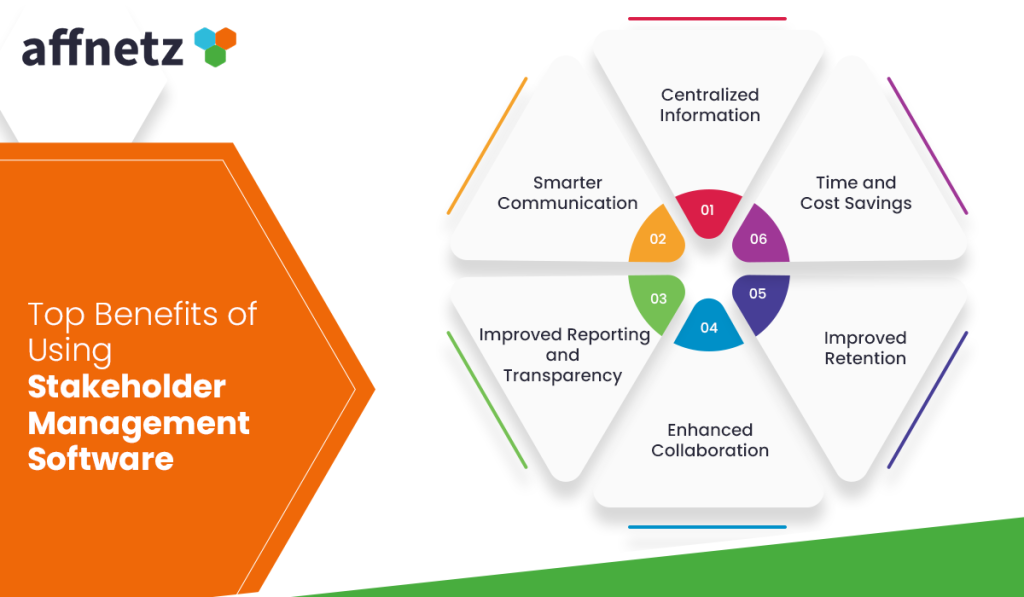
We will examine how the utilization of these kinds of software can transform your nonprofit organization.
1. Centralized Information
All stakeholder information, contact details, donation history, participation in events, and feedback exist in a single place. This renders easy accessibility of accurate data by teams anywhere, anytime.
2. Smarter Communication
You can email personalized channels, newsletters, or updates depending on the interests of each stakeholder or past involvement. This creates more emotional appeal and makes your audience interested.
3. Improved Reporting and Transparency
Having automatic reports simplifies the process of sharing progress with the donors, board members, and regulators. Openness boosts your image, and your image will motivate more people to help.
4. Enhanced Collaboration
Data can be shared to help the board members, staff, and volunteers work together seamlessly. There is no confusion and duplication of efforts, as everybody is informed.
5. Improved Retention
With the help of engagement trends, nonprofits will understand who is not active and can engage them again with specific campaigns or appreciation events.
6. Time and Cost Savings
Nonprofits can use automation of various tasks, such as reminders, follow-ups, and reporting, as these tasks enable them to concentrate on the mission rather than administration.
Effective Strategies for Stakeholder Management in Nonprofits
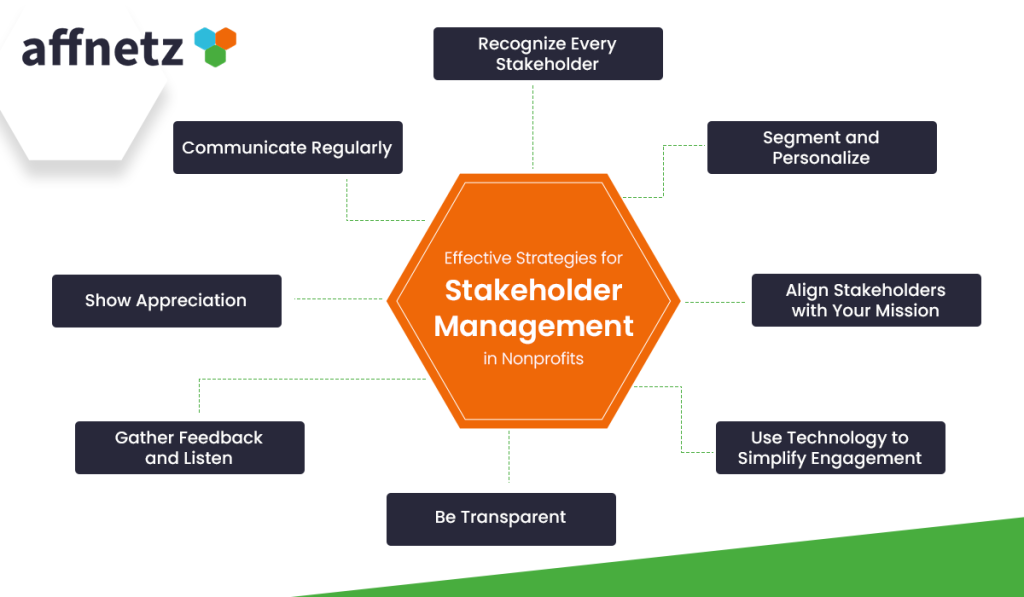
Although strategy is also important, as software is the tool. These are the effective measures to enhance stakeholder management.
1. Recognize Every Stakeholder
Begin by drawing a network of all people who are associated with your nonprofit: donors, partners, staff members, beneficiaries, etc. Learn their roles, expectations, and influence. This facilitates putting more emphasis on communication.
2. Communicate Regularly
Regular communication ensures that stakeholders are kept active. Send updates through newsletters, social media, personalized emails, or phone calls. Ensure that your communication is valuable; do not simply request donations, but tell stories of success, give updates on the project, and say thank you.
3. Show Appreciation
Even the simplest gestures, such as sending thank-you messages or highlighting the volunteer programs, go a long way in ensuring that the relationship is established permanently.
4. Gather Feedback and Listen
Don’t just talk; listen. Gather feedback by conducting surveys or holding meetings to know what the stakeholders think of your initiatives. This assists in getting better at it and gaining trust.
5. Be Transparent
Publicize financial reports, project results, and difficulties. Transparency will also assure the stakeholders that their assistance is being felt.
6. Use Technology to Simplify Engagement
Using nonprofit management software, automate the communication, send email reminders, and monitor all the interactions so that none of the relationships are left out.
7. Align Stakeholders with Your Mission
Remind the stakeholders regularly of the larger cause they are serving. Individuals feel inspired and engaged when they observe the outcomes of their engagement.
8. Segment and Personalize
All stakeholders are not equal. Divide them into groups (major donors, volunteers, corporate sponsors, etc.), and format your messages as such.
How Affnetz Empowers Nonprofits with Better Stakeholder Management
Affnetz is one of the numerous tools that can be listed; it is an all-in-one tool designed exclusively to serve nonprofits. It makes handling the stakeholders easier since communication, collaboration, and relationship tracking are all under one roof.
This is why Affnetz can assist nonprofits in creating better relationships and becoming more impactful:
1. One-Stop Stakeholder Management Software
Affnetz enables nonprofits to have a single system that manages donors, volunteers, board members, and beneficiaries. Both multiple platforms will no longer have to juggle and lose data in spreadsheets.
2. Donor Tracking and Volunteer Tracking
Monitor all the donations, volunteer time, and interactions without difficulty. Affnetz provides you with a 360-degree perspective of the experience of each of the stakeholders, beginning with the initial contact and extending to the extended participation.
3. Intrinsic Communication Features
Send correspondence emails, invitations, and thank you messages right on the platform. It maintains stakeholders without the need to have external email systems.
4. Collaboration Made Easy
This can be viewed as a uniting tool of collaboration between board members and staff, since they can use internal tools (Affnetz) to bring everyone up to date on the current projects.
5. Reporting and Transparency
Produce comprehensive reports to distribute to the funders, partners, and your community. Demonstrate to them how their effort is not in vain.
6. Empowering Relationships by Understanding
Affnetz offers analytics to assist the nonprofits in knowing which stakeholders are the most involved, as well as where they should improve. It is data-driven, which means you will never lose sight of important supporters.
7. Affordable and Scalable
As compared to other complex systems, Affnetz is designed to expand with your organization. It can fit any size of community project, whether it is a small nonprofit or a large one operating nationwide.
Concisely, Affnetz is not software; it is a co-pilot in your mission. It makes management easier, enhances relationships, and gives nonprofits the power to do what they do best, which is to create impact.
The Future of Stakeholder Management for Nonprofits
Nonprofit is a more digitalized, open, and relationship-oriented world. However, with the fierce competition on who gets what, relationship building and connection with the stakeholders will mean the difference between active organizations and those that fail.
In the future, we can expect:
- Increased application of AI-based information in forecasting donor actions.
- Additional automation of communication and reporting.
- Data security and privacy became the priorities.
- Greater focus on customized stakeholder experience.
Those who welcome such trends with the assistance of effective stakeholder management software such as Affnetz will be perceived as more professional, efficient, and credible.
Conclusion
Relationships are all in the world of nonprofits. It can be a donor, volunteer, or other member of the community, but all stakeholders contribute to the success of your organization. However, these relationships may easily get disorganized when handled manually.
This is where clever tactics and applications such as stakeholder management software can be used. Nonprofits can form sustainable relationships and enhance their effectiveness by establishing effective communication, valuing transparency, and using technology.
This is where Affnetz comes in to ensure this vision becomes reality. Having both communication and collaboration tools and engagement tracking allows the nonprofit to maintain relationships easily and devote more time to the mission.
Ultimately, stakeholder management is not all about systems but is all about people. Your nonprofit mission is even more brilliant when people feel part of it, appreciated, and knowledgeable.
